
AI is becoming capable of doing more inside business processes. It can classify incoming requests, extract information, summarize conversations, make recommendations, call APIs and trigger actions. In many workflows, it can now handle steps that previously required a person. That is useful, but it also creates a new problem.
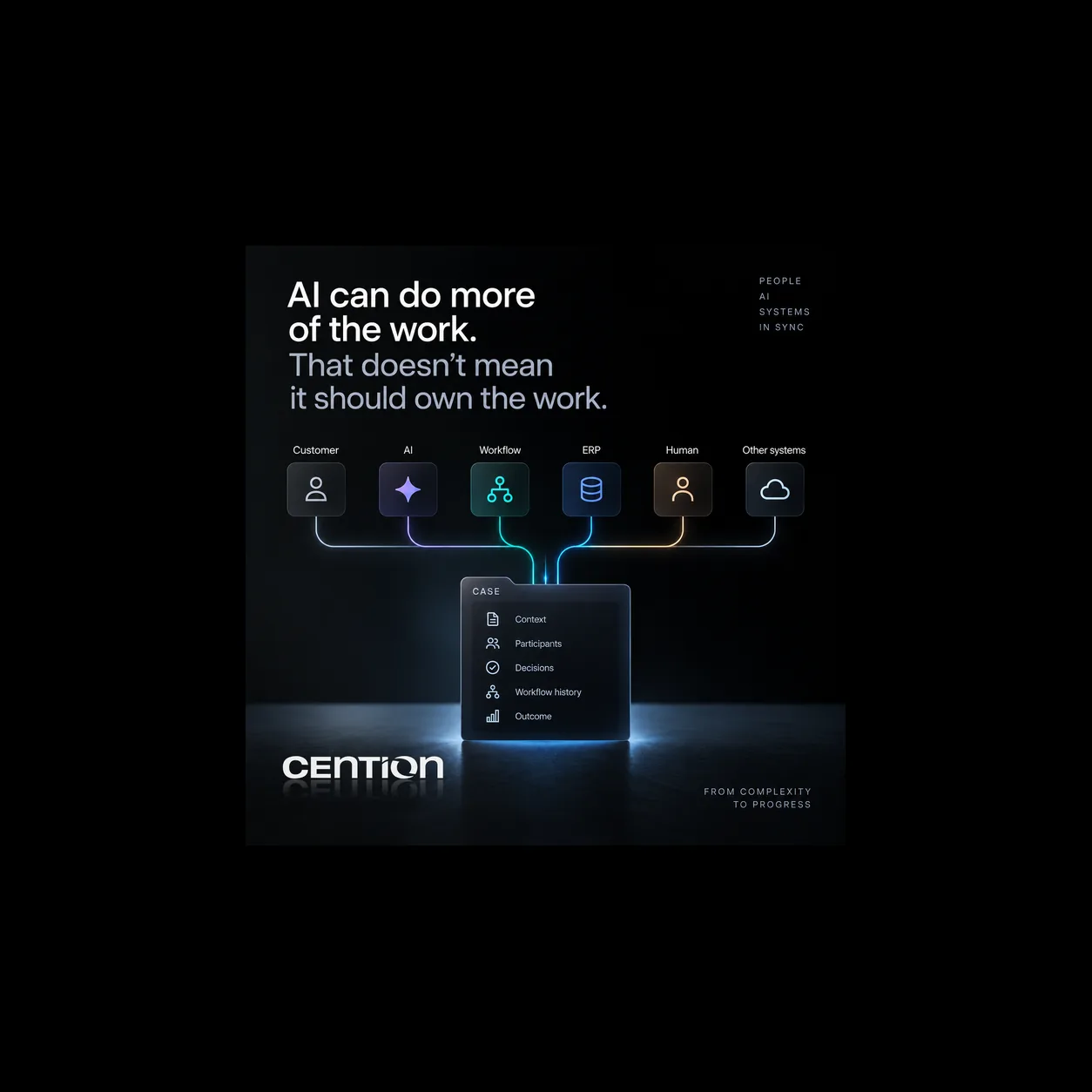
A real business process rarely depends on one participant. An AI model may classify a request, an ERP provides account or order data, a workflow decides what happens next, a human reviews an exception, and another system completes the transaction. An external API may provide additional information somewhere in between. Each participant does its part, but the difficulty starts when the outcome depends on all of them and no single place owns the execution from beginning to end.
That is where the harder questions appear. What ran? What decision was made? What failed? What is still waiting? Who needs to act next? And if something breaks halfway through, how do you make sure the work still gets completed without losing everything that happened before?
This becomes more important as businesses introduce more AI and automation. An AI model can make a good decision and still be part of a failed process. An API can return the correct information while the next step never happens. A workflow can execute exactly as designed and still require a human to handle an exception. The individual components may all be working correctly while the work itself is not getting done.
That is why we believe execution needs an owner.
At Cention, we see the case as more than a ticket or a record of a conversation. The case is where the complete execution of the work comes together. It keeps the context, the participants, the decisions, the workflow history and the outcome in one place.
That means AI can participate without becoming the centre of the process. People can step in when judgement is required. Business systems can provide or update information. APIs can connect external services. Workflows can coordinate what happens next. But all of them contribute to the same case, and the case remains the common context around the work.
There is a tendency today to talk about AI agents as if they should independently own complete business processes. Sometimes that may be appropriate, but often it is not. Enterprise processes usually involve rules, systems, responsibilities and exceptions that have developed over many years. Some decisions can be automated. Others may need validation, predictable machine learning, business rules or human approval.
The right architecture is not necessarily to give AI more independence. It is to give AI the freedom to do what it is good at while keeping the overall execution controlled, traceable and accountable. AI can be very capable without becoming disconnected from the rest of the business.
What happens when something fails matters just as much as what happens when everything works. A model may return an unexpected result, an external system may be unavailable, an API may time out or a workflow may reach an exception nobody anticipated. In those situations, the business still has work that needs to be completed.
The system should know what has already happened, what was supposed to happen next, who needs to become involved and what context they need in order to continue. That is where execution becomes different from simply connecting systems together. The goal is not only to automate the happy path. The goal is to make sure the work gets done.
The technology involved will continue to change. The AI model used today may not be the one used next year. Workflows will evolve, systems will be replaced, and new APIs and forms of automation will appear. That should not force the business to rethink where accountability lives every time the technology changes.
People, AI, workflows, APIs and business systems can all participate.
The work still needs an owner.