
Businesses have never had more technology available to them.
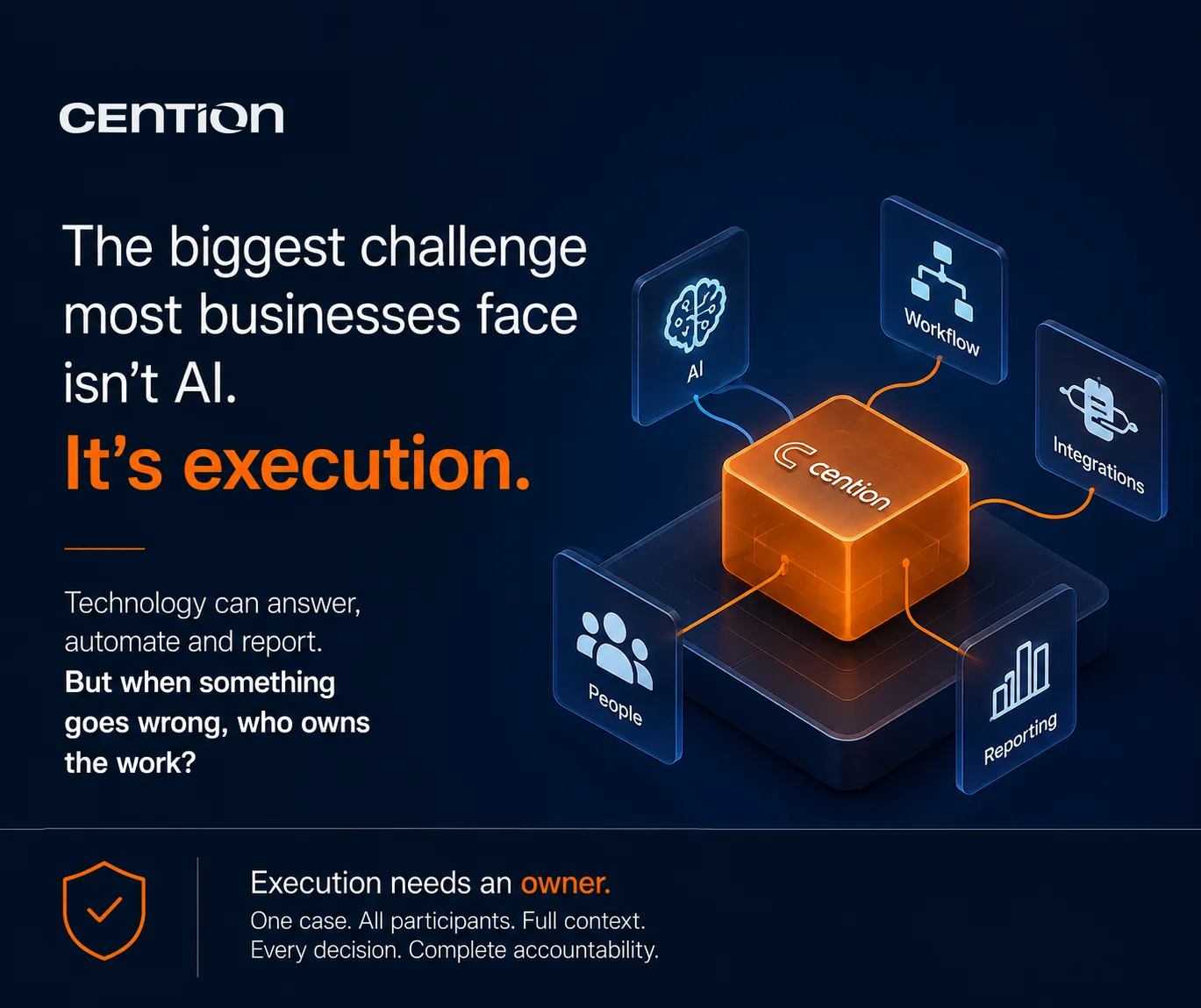
AI can answer questions, classify documents and generate content. Workflow engines automate repetitive tasks. Integration platforms connect systems that were never designed to work together, and reporting tools provide more data than ever before.
Individually, these technologies solve real problems. That's why businesses continue to invest in them.
The challenge starts when they all have to work together.
At first, everything appears to be working. Information flows between systems, workflows become faster and AI helps automate tasks that previously required manual effort. But as the architecture grows, something else happens.
Execution becomes fragmented.
A workflow might start in one system, call an AI model, trigger an external automation, update a CRM and finally send the result to another business application. Each platform knows what it did, but none of them owns the complete execution.
That becomes a problem the first time something goes wrong.
Where do you start looking?
Which system owned the process?
Which workflow made the decision?
Which AI model or agent participated?
What happened before the failure? What happened afterwards?
If an automation stopped halfway through, how do you make sure the work is still completed on time?
Perhaps the most important question of all is how you understand the outcome well enough to prevent the same thing from happening again.
These are no longer questions about AI or automation.
They're questions about execution.
At Cention, we've come to believe that execution needs an owner.
Not an owner of the individual technologies, but an owner of the work itself.
That's why the case sits at the center of everything we do.
The case brings together the participants, the context, the decisions, the workflow history and the outcome into a single place. Humans, AI models, workflow engines, APIs, business systems and external services all become participants in the same execution. Technologies are free to evolve over time, while the case preserves the complete history of what happened and why.
For some businesses, Cention provides the complete stack—workflow orchestration, automation, AI, routing, reporting and case management. Others already have those technologies in place and use Cention as the execution layer that brings them together.
The principle is the same.
Execution should have one owner.
Technology is going to keep changing.
Your ability to execute work shouldn't have to.