
Most business systems are very good at recording outcomes.
An order was approved. A refund was issued. A customer case was escalated. An invoice was paid.
Finding out what happened is usually not difficult.
The harder question is understanding why it happened.
That question becomes more important as businesses evolve. People leave. Systems are replaced. Workflows are redesigned. AI models improve. The technologies involved in a process today may not even exist a few years from now.
Yet the business still needs to understand why a particular decision was made.
At Cention, we’ve gradually come to see the case as something much more than a collection of activities.
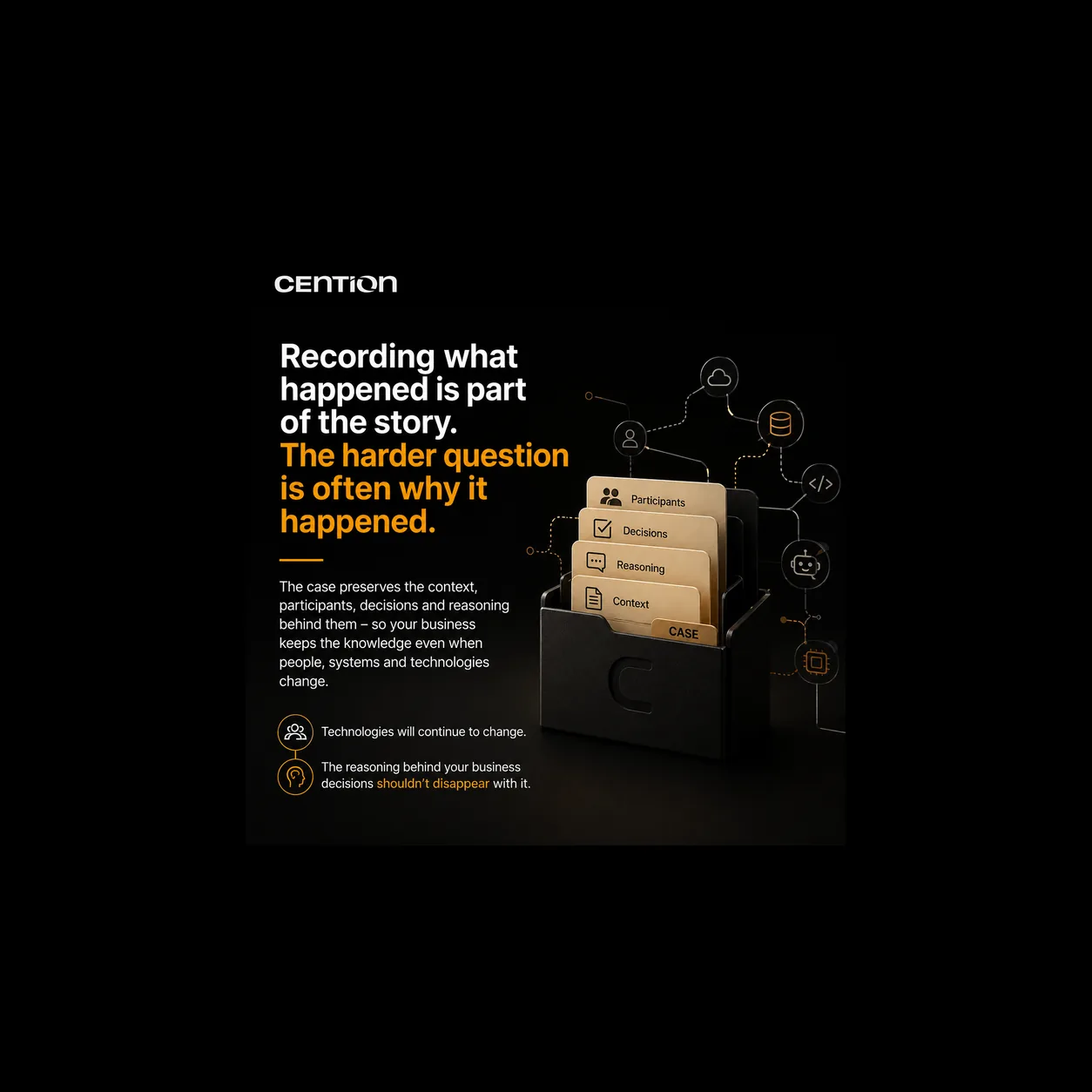
A case should preserve the context surrounding a piece of work. It should tell you who participated, what information was available, which decisions were made and, just as importantly, the reasoning behind them.
That’s what allows technology to evolve without losing the knowledge behind the work.
A workflow might change several times during the lifetime of a business. The AI models may be replaced. New systems will be introduced and old ones retired. None of that should make it harder to understand why an outcome was reached.
The case provides continuity while the participants remain free to evolve.
For us, that’s one of the biggest differences between storing data and preserving knowledge.
Data tells you what happened.
Knowledge helps you understand why.
As businesses continue to automate more processes, we believe that distinction becomes increasingly important. The value isn’t just in executing work efficiently today, but in making sure tomorrow’s employees, customers and auditors can still understand the decisions that were made.
Technology will continue to change.
The reasoning behind your business decisions shouldn’t disappear with it.